
A Complete Guide to Makhana Sizes: 4+ Suta, 5+ Suta and 6+ Suta Explained
Root Baskets ·
If you've shopped for makhana (fox nuts) recently, you've probably noticed packs labelled 4+ suta, 5+ suta or 6+ suta, sitting alongside separate 250 g, 500 g and 1 kg options. It's a reasonable question: are these the same thing, and does a bigger number mean a bigger pack? They don't, and it doesn't — this guide walks through what suta actually measures, how the three Root Baskets grades compare, and how to pick the right one for what you're cooking.
What "suta" actually measures
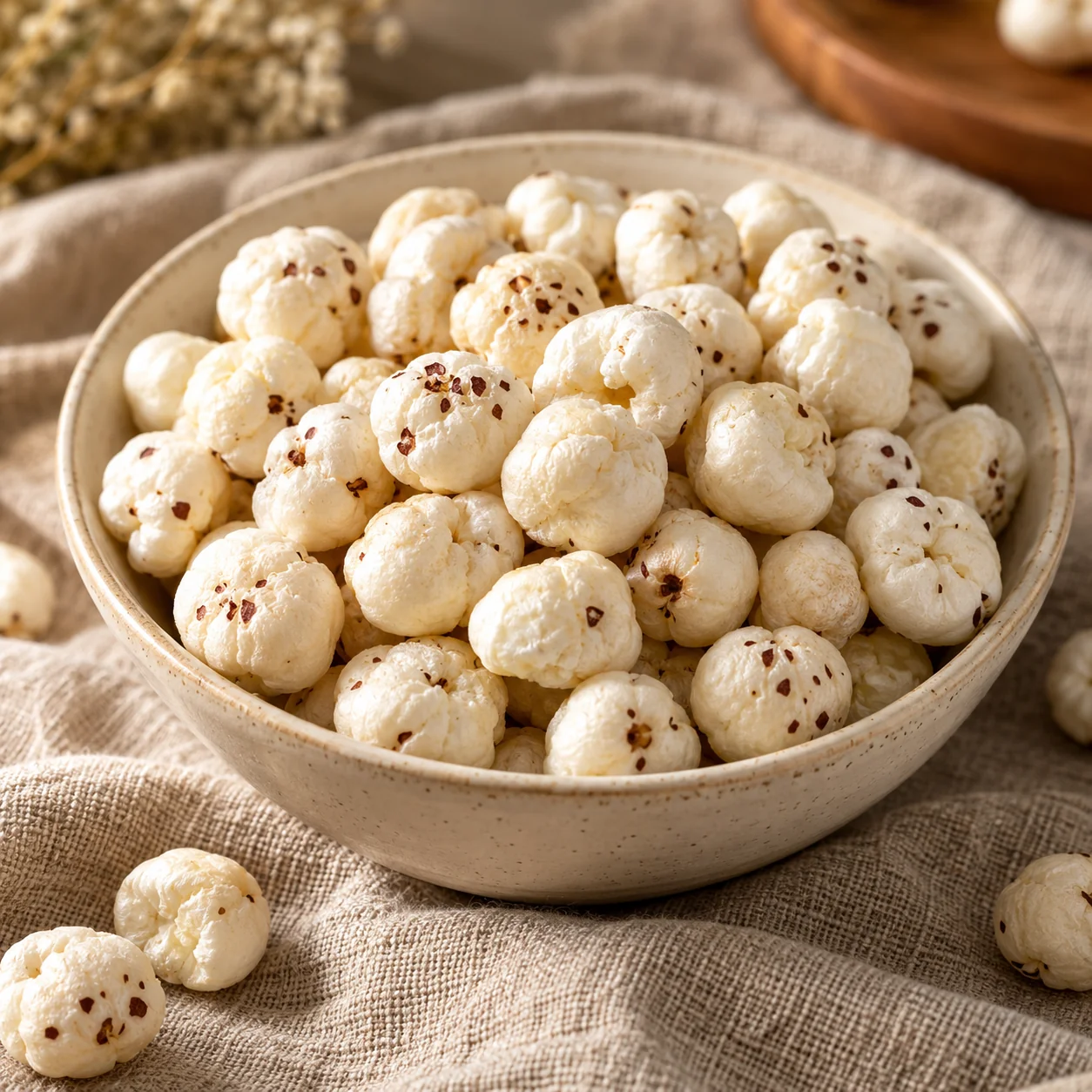
Suta is a traditional trade term used to describe the size of an individual puffed makhana seed, not the weight of the pack it's sold in. A higher suta number means each puffed seed is larger and has typically been sorted more carefully for size and shape before packing. A lower suta number simply means smaller, more everyday-sized pieces — it says nothing about freshness, quality of preparation, or how the makhana was grown.
This is the single most useful thing to remember when comparing packs: suta is about the seed, and pack weight (250 g, 500 g or 1 kg) is a completely separate choice you make based on how much you want to buy. A 250 g pack of 6+ suta makhana contains larger individual pieces than a 250 g pack of 4+ suta makhana — the weight is identical, the seed size is not.
Comparing the three grades
Regular Makhana — 4+ suta
Regular Makhana is graded at 4+ suta, the most commonly available size and a sensible everyday choice. The pieces are smaller than the Premium or Super Premium grades, which actually makes them convenient for recipes where makhana gets broken up anyway, such as a makhana kheer, or for roasting a quick snacking batch with ghee and spices. If you're trying makhana for the first time or buying for regular use rather than a special occasion, this is usually the practical starting point. Browse the Regular Makhana pack sizes and pricing.
Premium Makhana — 5+ suta
Premium Makhana steps up to 5+ suta, meaning each puffed seed is noticeably larger and more uniformly sized than the Regular grade. The bigger pieces hold their shape well during roasting and give a fuller, more satisfying bite, which is why this grade tends to get chosen for festive snacking trays, gifting, and dishes where the makhana itself is the star rather than a background ingredient. See current pricing and pack sizes for Premium Makhana.
Super Premium Makhana — 6+ suta
Super Premium Makhana carries the 6+ suta grade, the largest and most carefully selected size in the Root Baskets range. These are the pieces you'll typically see used whole in premium gift boxes or served at celebrations, where size and presentation matter as much as taste. If you want the biggest available piece and don't mind paying the premium that comes with more careful sorting, this is the grade to choose. Check pack sizes and pricing for Super Premium Makhana.
Grade vs. pack weight: a quick way to remember it
Think of it as two completely independent decisions. First, decide how large you want each individual puffed seed to be — that's the suta grade (4+, 5+ or 6+). Second, decide how much makhana you want in total — that's the pack weight (250 g, 500 g or 1 kg). You can combine any grade with any pack size: a 1 kg pack of Regular Makhana and a 250 g pack of Super Premium Makhana are both completely normal choices, just suited to different needs and budgets.
Comparing size, appearance and texture in person
If you have more than one grade on hand, the easiest way to see the difference is to tip a small handful of each onto a plate side by side. Look for how uniform the pieces are in size — higher grades are generally sorted more tightly, so you'll see less variation piece to piece. Larger-grade pieces also tend to feel a little denser in the hand before roasting, simply because there's more puffed seed per piece.
Texture after roasting is where personal preference comes in more than grade alone: roasting time, the amount of ghee or oil used, and how coarsely the makhana is seasoned will all affect the final crunch regardless of suta grade. A higher grade gives you a bigger piece to work with, not automatically a crunchier one.
Storage and buying considerations
However you buy it, makhana is sensitive to moisture — it will turn chewy rather than crisp if it absorbs humidity from the air. Keep whichever grade and pack size you choose in an airtight container, away from direct sunlight and steam, and roast only the amount you plan to eat in the next few days for the best texture.
When deciding how much to buy, it's worth thinking about use rather than grade. A household that snacks on makhana often may get better value from a 1 kg pack of Regular Makhana than a small pack of a premium grade, while someone buying for a single festive gift tray may prefer a smaller pack of Super Premium Makhana. Both are reasonable ways to shop the same category — the Makhana collection lists every grade and pack size together so you can compare prices directly before choosing.
Choosing the right Root Baskets pack
If you're still deciding, a simple rule of thumb: choose Regular Makhana for everyday snacking and cooking where pieces will likely be broken up anyway, choose Premium Makhana when you want a fuller bite without paying for the largest available grade, and choose Super Premium Makhana when presentation and piece size matter most, such as for gifting or a special occasion. Whichever grade you pick, the pack weight is a separate, independent choice — pick 250 g to try it, 500 g for regular use, or 1 kg if makhana is already a pantry staple in your home.