
A Guide to Buying and Storing Premium Dry Fruits
Root Baskets ·
A well-chosen selection of dry fruits adds texture and variety to everyday cooking. Almonds can bring crunch to breakfast, raisins can soften into a sauce and dates can lend sweetness to a simple snack. Buying an amount you will use and storing it well matter more than buying the largest pack.
Know what you are choosing
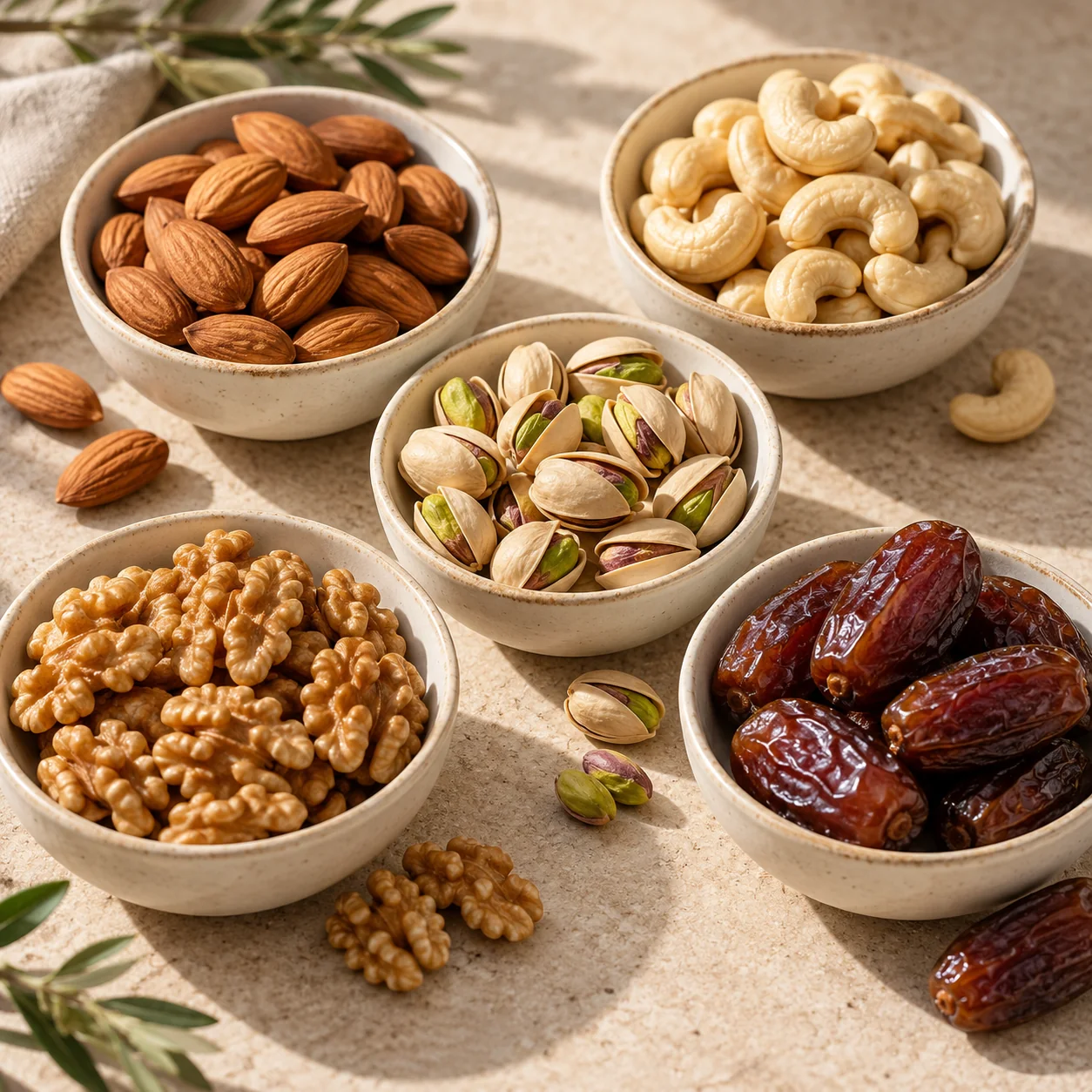
The term dry fruits is often used broadly in Indian shopping. It can include nuts such as almonds, cashews, pistachios and walnuts, alongside dried fruits such as raisins and dates. They have different textures and storage needs, so read each product label rather than treating them as interchangeable.
Plain, roasted, salted and sweetened products also serve different purposes. Check the ingredient list if you want an unseasoned ingredient for cooking. Nuts are allergens; review the pack's allergen and cross-contact information when shopping for anyone with an allergy.
Checking freshness and quality
Begin with the packaging. It should be intact and suitable for protecting the contents. Look for product identification, dates and storage directions. If you can inspect the contents, check for unexpected discolouration, insects or moisture.
Nuts should smell characteristic of the ingredient. A stale, paint-like or rancid smell is a reason to discard them. Dried fruit varies naturally in colour and softness; a glossy surface alone does not establish quality. If a product has an unusual sour odour, visible mould or other signs of spoilage, do not use it.
Price and appearance are only part of the decision. Compare the actual pack weight, ingredients and intended use. Browse the dry-fruit collection for the product information and sizes currently available.
Storing nuts
Keep nuts tightly sealed, away from direct light, heat and moisture. In a warm kitchen, the refrigerator can help protect the flavour of nuts, especially oily varieties such as walnuts. Use a sealed container so they do not pick up refrigerator odours.
For longer storage, freezing may be suitable if the product label allows it. Divide into small portions and seal well. Let a closed container come towards room temperature before opening to reduce condensation on the contents. Follow the label's timing rather than assuming every nut keeps for the same period.
Storing dried fruits
Seal dates and raisins promptly after opening and use a clean, dry utensil. Their moisture levels differ, and some products need refrigeration after opening. Follow the instructions on the pack. Keep a small portion accessible and the remainder protected if you use them slowly.
Avoid topping up an old container indefinitely. Clean and dry it between batches, and keep the original date and label information with the contents.
Everyday serving ideas
- Add chopped almonds or pistachios to porridge or a breakfast bowl just before eating.
- Fold raisins into rice dishes or use chopped dates to sweeten a homemade mixture.
- Toast a small amount of nuts gently for a garnish, stirring often and letting them cool before tasting.
- Pair a small bowl of dry fruits with freshly prepared makhana for contrasting textures.
For a simple rice garnish, warm a little ghee or oil, add a small handful of cashews and stir over gentle heat until lightly coloured. Add raisins briefly towards the end, then remove from the heat. Nuts can go from golden to burnt quickly, so keep the pan in view.
Plan for the way you cook
Choose smaller packs when trying an unfamiliar ingredient or when your household uses it occasionally. Keep a simple rotation: older packs first, new packs behind. Write the opening date on the container and check the contents before each use.
Explore our whole-spice guide for another way to build flavour, or ask the team about information on a specific RootBaskets product.