
Essential Indian Whole Spices and How to Use Them
Root Baskets ·
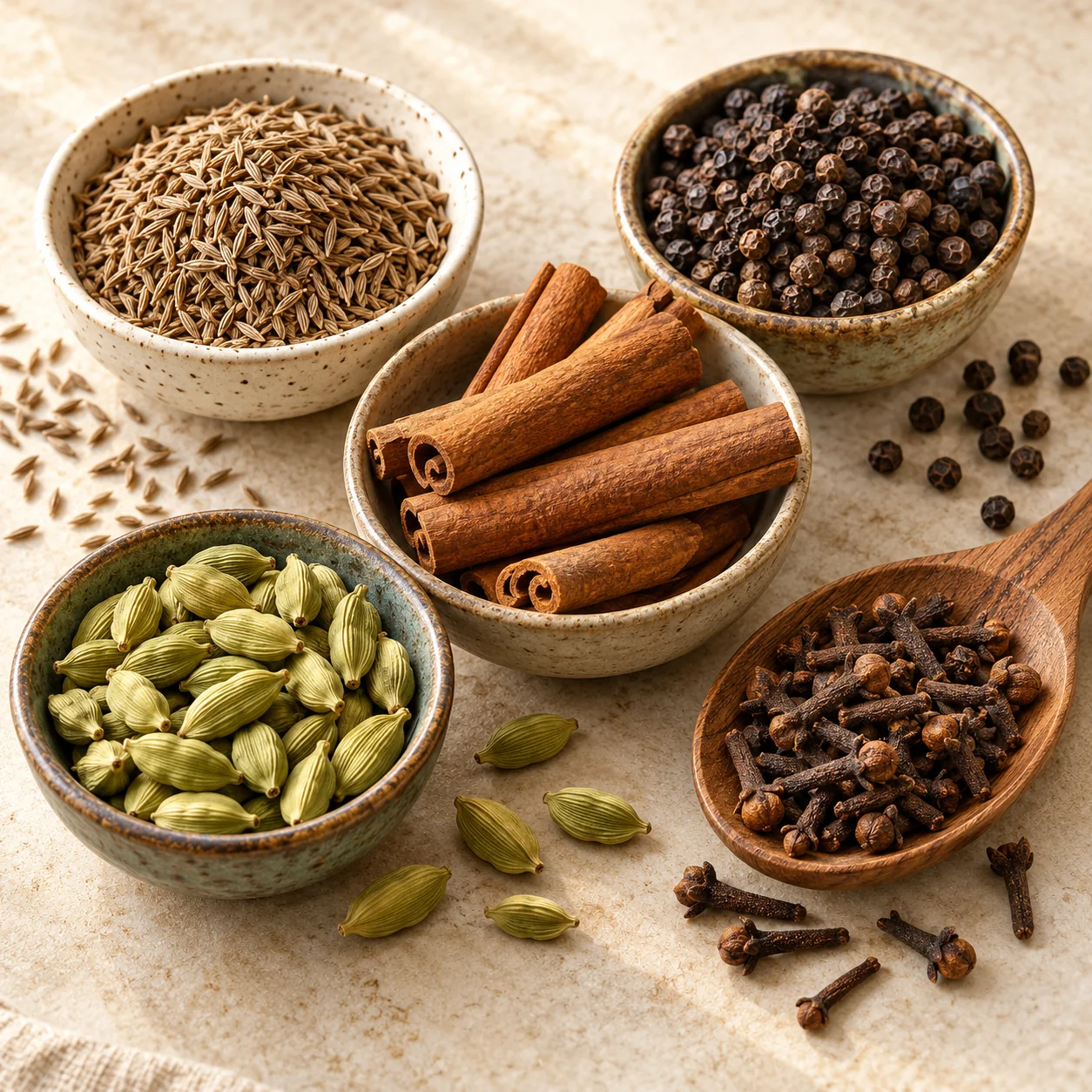
Whole spices are a starting point for many Indian dishes. A few cumin seeds in warm oil or a lightly crushed cardamom pod can shape the aroma of an entire preparation. Learning when to add them is as useful as learning which ones to buy.
Begin with a small collection
Choose spices you will use in the dishes you already cook. A compact selection that stays fresh is more useful than a crowded shelf of forgotten jars. Buy clearly labelled products and check the pack for storage instructions and dates.
Explore the whole-spice collection to see the products and pack sizes currently available.
Cumin and coriander seeds
Cumin, often called jeera, has a warm, earthy aroma. It is frequently added to oil or ghee at the start of a savoury dish. Use moderate heat and watch closely: dark, burnt seeds can make the dish bitter.
Coriander seeds bring a warm, citrus-like note. Lightly crushing them exposes more of their surface. They can be toasted gently and ground for a recipe, or used in preparations that allow time for their flavour to infuse.
Black pepper and cloves
Black pepper brings a woody aroma and heat. Grind or crush it near the time of use for a more pronounced fragrance. A little can lift a roasted snack, a soup or a savoury sauce.
Cloves, or laung, are powerful and warming. Use a small quantity to begin with, particularly in a small pot of rice or a simmered dish. Whole cloves are hard to bite into, so keep track of them and remove before serving where practical.
Cinnamon and cardamom
Cinnamon contributes sweet, woody warmth to both savoury and sweet cooking. Different varieties have different strength and texture, so use the product and quantity specified by your recipe when precision matters.
Cardamom pods hold aromatic seeds with floral and citrus-like notes. Lightly crack a pod to help it infuse into a simmering preparation. For a finer texture, remove and grind the seeds shortly before use. Store remaining whole pods well sealed.
Fennel seeds
Fennel has a sweet, anise-like aroma. It can be added whole, lightly crushed or ground, depending on the dish. Try a small amount in a vegetable preparation or a spice mixture and adjust in a later batch to suit your taste.
Dry toasting without scorching
- Use a clean, dry pan over low to medium heat.
- Add a small amount of whole spice and keep it moving.
- Watch for a more noticeable aroma and a slight colour change. Do not wait for smoke.
- Transfer to a cool plate promptly. Spices continue to cook in a hot pan.
- Let them cool before grinding in equipment suited to dry spices.
Different spices toast at different rates. Toasting them separately gives you more control when making a mixture. You do not need to toast every spice for every recipe; sometimes the dish calls for an untoasted flavour.
Blooming spices in oil
For a simple tempering, warm a little oil or ghee and add the whole spices called for by the recipe. Keep the heat controlled and avoid adding wet ingredients abruptly to hot fat. Seeds may splutter. Have the next ingredients ready so you can continue cooking before the spices burn.
Keeping the aroma in the jar
Store whole spices in tightly closed containers away from the hob, direct sunlight and moisture. Use a dry spoon. Avoid shaking a jar directly over a steaming pot, where moisture can enter the container. Keep labels and dates with each batch and buy quantities you expect to use.
Spices gradually lose aroma; if a sound, dry spice smells faint, a fresh pack may improve the dish. Discard spices with signs of mould, insects or unexpected moisture. Follow the pack's best-before and storage directions.
Put the basics to work
Try cumin in a rice dish, crushed pepper on pan-roasted makhana, or cardamom in a simple milk pudding. Introduce one change at a time so you can notice what each spice contributes. For another pantry essential, read our dry-fruit guide.